
Branded Surveys: Get Paid Cash
Branded Research, IncLifestyle
4.33.03K Reviews
- Version
- 1.9.24
- Installs
- 500.00K
- Age Rating
- Everyone
Screenshots
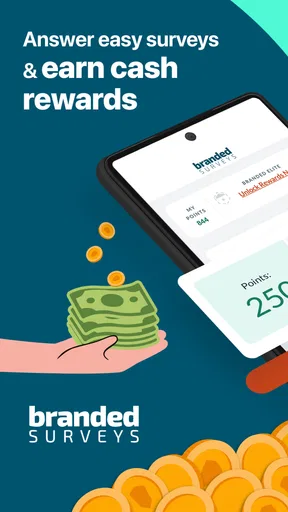
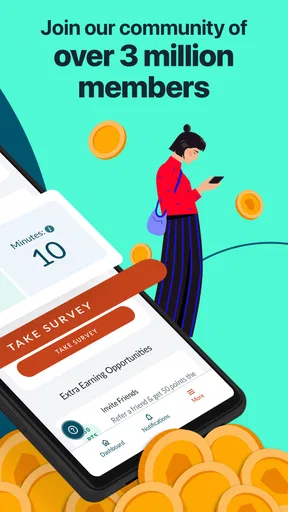
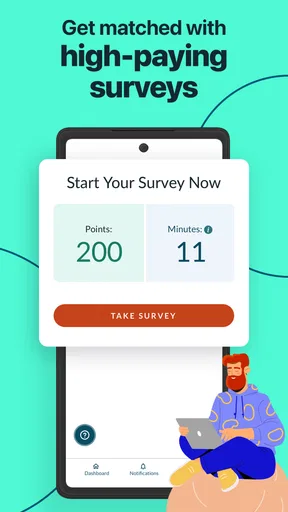
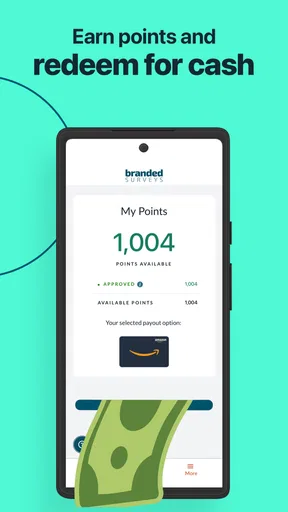
Our Review of Branded Surveys: Get Paid Cash
 Analysis by Appyee
I tried Branded Surveys as a small, occasional way to turn spare minutes into cash rewards, and my first impression was easy to understand: the app gives you a clear reason to open it. Instead of asking you to learn a complicated system, it puts paid surveys at the center of the experience. You share opinions, complete qualifying questions, and work toward rewards. That simplicity is the main attraction, but it also raises an important question: does it remain useful after the first burst of curiosity fades?
My answer is cautiously positive. This is a free lifestyle app from Branded Research, Inc., aimed at people who are comfortable exchanging some attention for modest rewards. It is not a replacement for employment, and I would not treat it as dependable income. I see it more as a pocket activity for waiting rooms, commutes, or quiet moments when I would otherwise scroll without purpose. The app’s real test is not whether one survey feels worthwhile, but whether the routine still feels fair after several weeks.
Branded Surveys has a 4.4 average from around 14 thousand ratings, with over 500 thousand installs. Those figures suggest that the concept has found a substantial audience, although popularity alone does not guarantee that every survey will suit every user. It is free, rated for Everyone, and the current version is 1.9.21. Android users need version 7.0 or later, which covers many older devices while still making the app accessible to a broad audience.
What the first week feels like
The first week is where the app makes its strongest case. I can open it with a specific goal, look for available survey opportunities, and decide whether the estimated effort seems sensible for the reward. That choice matters. A survey app is much easier to tolerate when I treat each task as optional rather than feeling obliged to complete everything that appears.
The opening experience is especially suitable for people who enjoy structured micro-tasks. If you like answering questions, comparing products, and giving opinions, the activity can feel more engaging than passive entertainment. It also has a useful psychological advantage: the reward is tied to a completed action, so the time does not feel entirely wasted even when I am filling a short gap in the day.
My practical advice is to use the first week as a sampling period rather than trying to maximize every possible reward. Notice which surveys take longer than expected, which topics hold your interest, and how often you are screened out during qualification. That information tells you more about the app’s fit than the first successful completion does.
A realistic scenario would be waiting for an appointment. I might have ten or fifteen spare minutes, no urgent messages to answer, and enough concentration for a questionnaire. In that situation, Branded Surveys can turn an otherwise empty interval into a small step toward a cash reward. The same survey may feel completely different when I am tired, rushing between tasks, or trying to focus on something more important.
Why the early novelty works
The novelty comes from seeing a direct connection between an opinion and a possible reward. Many lifestyle apps ask users to browse, track, or organize something without an obvious short-term result. Here, the purpose is clearer. I know why I am answering questions, and that clarity makes the first few sessions feel purposeful.
There is also a useful sense of control. I can skip an opportunity that looks too long or poorly matched to my interests instead of committing to a fixed schedule. That flexibility is one reason I would choose this over a rigid side-task arrangement for very short periods of free time.
Still, I would not confuse a simple interface with guaranteed efficiency. Survey availability depends on the opportunities presented to me, and qualification can interrupt the flow. A survey that looks promising may not become a completed reward if the qualifying answers do not match what the research requires. That is normal for this kind of service, but it is the first source of disappointment new users should expect.
How I would set up a sensible routine
I would begin by choosing two or three specific moments when I am genuinely free, such as a lunch break or the end of the evening. I would not keep checking the app every few minutes. That habit can make a small-reward activity feel intrusive, and it encourages me to accept surveys without thinking about the time involved.
I would also keep expectations modest. The app is best approached as a way to collect occasional rewards, not as a financial plan. If I need predictable earnings, I would look for paid work with a defined rate, schedule, or contract instead. If I want a flexible activity that can fit around idle time, the survey format makes more sense.
One non-obvious advantage of this approach is that it protects the value of my time. I am not judging every survey only by its reward; I am judging it by whether it fits the moment. A longer questionnaire may be acceptable when I am already waiting, while the same task is a poor choice when I have only a few minutes before leaving.
What remains useful from month to month
After the initial curiosity wears off, the app’s value depends on whether it can become a low-effort habit without taking over my day. I think it can work for users who naturally encounter small pockets of downtime and are happy to check in selectively. It is less convincing for anyone who expects a steady stream of equally attractive surveys.
The recurring value is practical rather than exciting. I can return when I have time, answer questions when a suitable opportunity appears, and gradually work toward rewards. That may sound ordinary, but ordinary is exactly what a long-term lifestyle tool needs. It does not have to entertain me every day; it needs to remain easy enough that I do not resent opening it.
The important trade-off is consistency versus availability. A regular personal routine is possible, but the app cannot make every session equally productive. Some days may offer an appealing task, while other days may produce little that fits my schedule or interests. I would therefore measure success over several weeks rather than judging the service by one quiet session.
Who gets the most lasting value
I think the best audience is someone with flexible spare time, a phone that meets the Android requirement, and realistic expectations about survey rewards. Students, commuters, parents waiting during activities, and people who often spend short periods in queues may find a natural use for it. The key is having downtime that can be interrupted without causing a problem.
It can also suit people who prefer opinion-based tasks to games, cashback browsing, or complicated reward systems. The activity is direct: answer questions and pursue the available reward. That straightforward structure may be more appealing than apps where the user must shop, watch large amounts of content, or complete several unrelated actions before seeing progress.
On the other hand, I would skip it if I dislike questionnaires, become frustrated by qualification screens, or need to know exactly how much I will earn for each hour. I would also avoid building a daily obligation around it. The moment I feel pressured to complete a survey because I have opened the app, its convenience starts turning into maintenance.
How it compares with familiar alternatives
Compared with cashback apps, Branded Surveys asks for opinions rather than purchases. That makes it more accessible when I do not want to spend money first, but cashback services may feel more worthwhile when I already planned to buy something. The two models reward different behavior, so neither is automatically better.
Compared with microtask platforms, the survey format is usually easier to understand because the task is centered on questions rather than a wider range of assignments. Microtask services may offer more variety, while this app can be preferable when I want a focused, low-learning-curve activity. The downside is that a narrow format can become repetitive more quickly.
Compared with casual games, this app offers a clearer practical purpose but less entertainment. I would not open it expecting relaxation or a compelling progression system. I would open it when I want to do something small and potentially useful with idle time. That distinction helps prevent disappointment.
The maintenance burden behind the simple idea
The app is not difficult to understand, but long-term use still requires discipline. I need to decide when checking is worthwhile, stop when a survey no longer fits my available time, and remember that not every opportunity deserves attention. The burden is small, yet it is real because the reward is usually not large enough to justify careless time management.
My strongest maintenance tip is to create a personal stopping rule. For example, I might stop when I have only a few minutes left, when the questionnaire becomes repetitive, or when I notice that I am answering too quickly just to finish. This protects the quality of my responses and keeps the activity from becoming an automatic reflex.
A second useful habit is to review my own results by time, not just by reward. If a task repeatedly takes more concentration than I expected, I should be more selective the next time a similar opportunity appears. This is a better way to judge value than focusing only on the attractive number shown before starting.
I would also keep the app in a limited place on my phone rather than putting it among the apps I check constantly. That small change reduces the temptation to interrupt work or conversations for a possible survey. The app works best when it serves spare time instead of creating more interruptions.
Where the friction appears
The main friction is the gap between seeing an opportunity and completing it. Qualification questions can consume part of the session before I know whether the survey is a match. Even when that process is necessary for research, it can feel inefficient from the user’s point of view because the time spent answering preliminary questions does not always lead to a finished task.
Repetition is another concern. Survey work naturally involves similar patterns: personal background questions, preferences, shopping behavior, and reactions to products or ideas. Some repetition is harmless, but over time it can make the activity feel less like a flexible reward option and more like a chore.
There is also a concentration cost that is easy to underestimate. A short survey is not necessarily effortless if the questions require careful reading or consistent choices. Rushing through answers may make the experience unpleasant and can undermine the quality of the opinion I am supposed to provide. I would use it when I can pay attention, not merely whenever the screen is available.
Questions I would answer before installing
If I were advising a friend, I would first say that the app is free to install and suitable for general audiences, but free does not mean effortless. The exchange is my time and attention for the chance to earn rewards. Anyone uncomfortable with that trade should choose a different type of lifestyle app.
I would also explain that it is not a reliable substitute for a job. The app can provide occasional value, especially when used during otherwise unproductive downtime, but I would not budget rent, bills, or regular expenses around it. Treating the rewards as incidental money leads to a healthier experience.
Another question is whether it is worth returning every day. My view is no: daily checking is optional, not a requirement for the app to make sense. A few intentional visits during the week may be better than constant monitoring. If a user feels compelled to open it repeatedly, the time cost can outweigh the benefit.
Finally, I would ask whether the person enjoys sharing opinions. If the answer is yes, the work may feel reasonably natural. If the answer is no, the reward may not compensate for the boredom. The app’s strongest feature is also its limitation: it is specifically built around surveys, not a broad collection of ways to earn.
My long-term verdict
Branded Surveys earns a place on my phone only when I treat it as an occasional tool rather than a permanent source of excitement. Its first-week appeal is clear, and its month-to-month value can remain respectable for people with flexible downtime. The experience is most successful when I choose surveys carefully, protect my schedule, and accept that availability and effort will vary.
I appreciate that the app has a focused purpose and does not require me to turn shopping or entertainment into a reward strategy. I can use it during a wait, decide whether a task fits, and move on without making it the center of my routine. That makes it more sustainable than an app that constantly demands attention.
My reservations are equally important. Qualification friction, repeated question formats, and uncertain productivity can wear down enthusiasm. Someone seeking predictable hourly income will likely be better served elsewhere, while someone who dislikes surveys should not expect the reward system to transform the experience.
The lasting value comes from selective use, not constant use. If I open it only during genuinely free moments and judge each survey against the time I have available, it can be a sensible addition to a lifestyle-app collection. If I chase every opportunity or expect dependable earnings, the novelty will probably fade quickly.
For me, that makes it a qualified recommendation. I would suggest trying it to a patient user who wants a free, straightforward way to exchange spare minutes for cash rewards, while being honest about the limits. It is not a shortcut to financial security, but it can make certain empty moments feel more productive without demanding a complicated long-term commitment.
Privacy and Permissions
See what permissions an app requests and how it handles your data.
- Photos/Media/Files
- read the contents of your USB storage
- Storage
- read the contents of your USB storage
- Camera
- take pictures and videos
- Microphone
- record audio
- Other
- view network connections, change network connectivity, full network access, change your audio settings, run at startup, control vibration, prevent device from sleeping, read Google service configuration
Verdict
Strengths of Branded Surveys: Get Paid Cash
- Simple surveys can be completed during short breaks.
- Clear progress tracking shows how close you are to rewards.
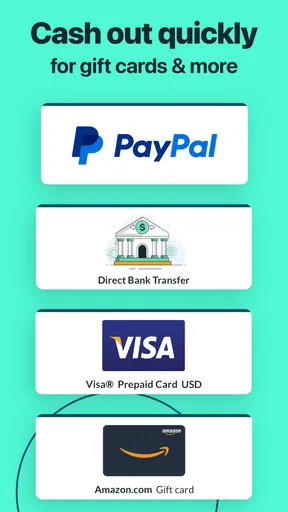
- Multiple payout choices provide flexibility when redeeming earnings.
- The app is lightweight and generally easy to navigate.
- Survey invitations can be filtered by available earning potential.
Limitations of Branded Surveys: Get Paid Cash
- Survey availability may vary significantly by location and profile.
- Some surveys screen you out after answering several questions.
- Earnings per survey are often modest compared with the time required.
- Profile questions may feel repetitive because they affect survey matching.
- Cash-out processing can take time after reaching the minimum threshold.
Similar Picks in This Category
View All
SmartThings
Samsung Electronics Co., Ltd.4.6

Google Home
Google LLC4.0

Pinterest4.2

Astrotalk - Talk to Astrologer
Astrology & Horoscope4.7

My Verizon
Verizon Consumer Group4.5

Samsung Wallet (Samsung Pay)
Samsung Electronics Co., Ltd.4.1
Frequently Asked Questions
What is Branded Surveys: Get Paid Cash?
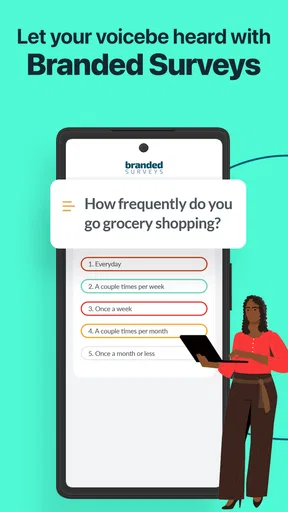
Branded Surveys is a rewards app that lets you earn points by completing online surveys and, in some cases, other available activities. The surveys generally ask about your shopping habits, opinions, lifestyle, or experiences. After reaching the required redemption threshold, you can exchange your balance for available rewards such as cash payments or gift cards, depending on your country and account eligibility.
How much money can I make with Branded Surveys?
Your earnings depend on the number of surveys available, their individual rewards, your demographic profile, and how consistently you qualify for them. Some surveys are short and pay modest amounts, while longer questionnaires may offer more points. Branded Surveys should be viewed as a way to earn occasional extra money rather than a replacement for employment, since availability and income can vary considerably.
How do I withdraw my rewards from Branded Surveys?
Once your account reaches the minimum redemption amount, you can request one of the reward options shown in the app or on the service website. Available choices may include PayPal, bank-related cash options, or electronic gift cards, but they can differ by location. Before redeeming, check your account details carefully and review any verification requirements or processing times.
Why might I be disqualified from a survey?
Survey providers usually target specific audiences, so not every questionnaire is suitable for every user. You may be screened out because your age, location, occupation, purchasing habits, or previous answers do not match the required profile. Disqualification can happen even after answering several questions. Providing honest, consistent information improves your chances of receiving suitable surveys in the future.
Is Branded Surveys safe and worth downloading?
Branded Surveys is designed for users who are comfortable sharing opinions and selected demographic information in exchange for rewards. As with any survey platform, read the privacy policy, understand how your data may be used, and download the app only from an official store. It can be worthwhile for small supplemental rewards, but users should not expect guaranteed surveys or substantial regular income.
